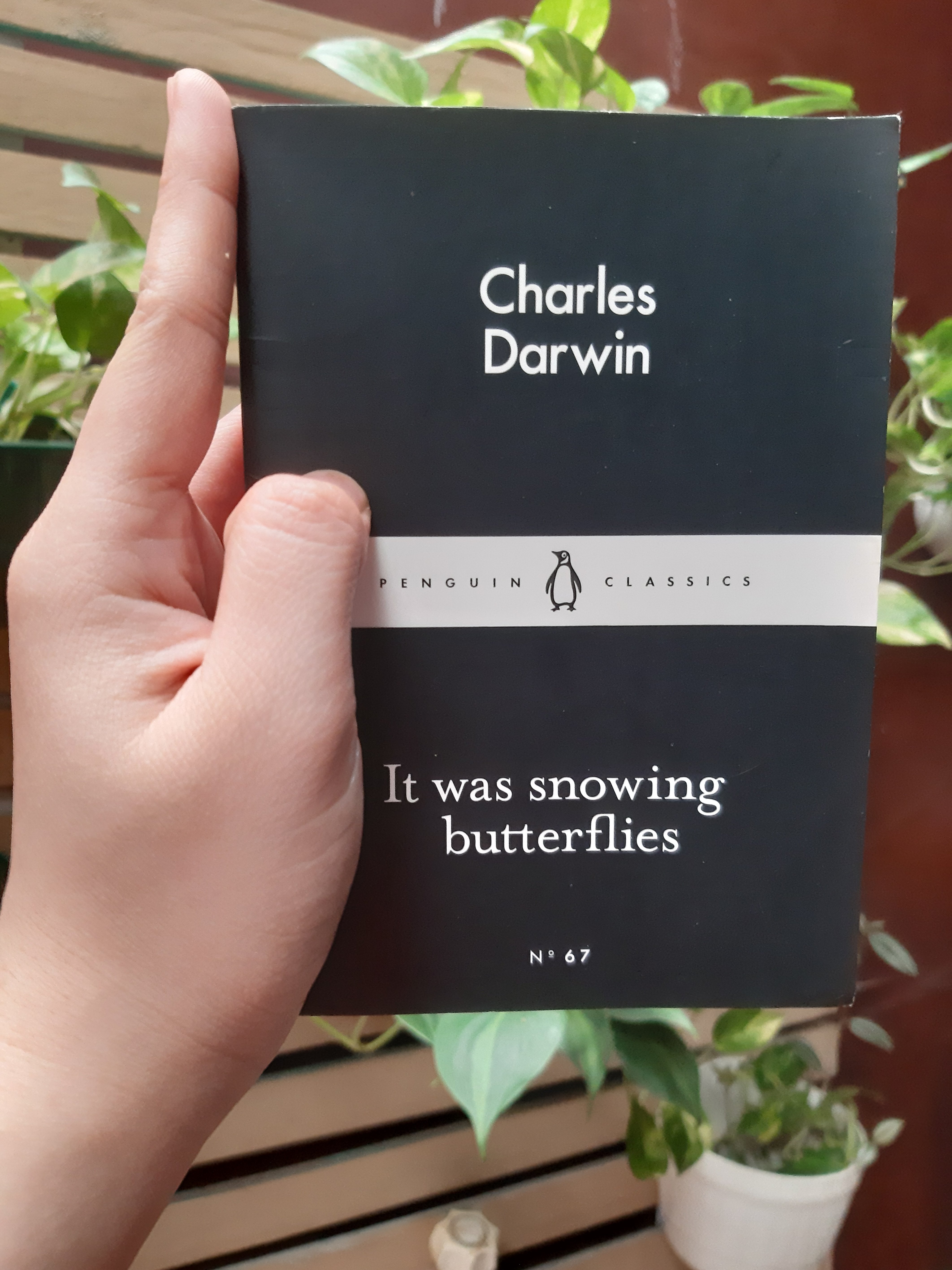
Owing to the pro and contra opinion of people toward Charles Darwin’s theories particularly the evolution one, one of his books was never in my wishlist until I found he was in the 67th in Penguin Classic Books. There are a lot of attractive titles with less than 100 pages from popular writers, such as Charles Darwin, Marco Polo, Karl Marx, Plato, even Jane Austen. The books of Penguin Classic extracted some chapters from the original books, for instance this book I read was an extract from “The Voyage of The Beagle” firstly published in 1839.
Overall, the narrative chronicles the journey of Charles Darwin as both a biologist and a geologist, alongside the voyage of the Beagle to three remarkable locations in South America: Patagonia, Tierra del Fuego, and the Strait of Magellan, all of which lie near Argentina and Chile. According to my ‘Google research,’ this journey took place in the decades following the independence of both Argentina and Chile from Spain. Despite my prior expectations of Darwin offering a fascinating account of the creatures (fauna, flora, and indigenous humans) he encountered during his exploration, I never imagined that I would develop an entirely new perspective on Darwin’s personality, leading me to hypothesize a connection between his theory of evolution and certain traits of his mindset. Beyond the factual explanations of his theory, particularly regarding the close relationship between existing animals and extinct species as evidenced by the guanaco (a species of animal), his written words and illustrations throughout the book reveal him to be an artistic naturalist. I wonder whether he had conceived of the possibility of evolution prior to his empirical discoveries. Of course, this speculation is unrelated to my personal agreement or disagreement with the theory of evolution.
The title, It Was Snowing Butterflies, was derived from a phrase recited by the seamen on their journey to Patagonia, meant to describe the sheer number of butterflies in the area, resembling the species Colias edusa. Not every scientist would recall and immortalize such a romantic phrase in the context of a scientific discovery. Furthermore, his ability to craft a compelling narrative, coupled with his skill in translating nature into vivid prose, adds an artistic dimension that captivated my imagination, allowing me to visualize the real-world settings he described. As a non-scientist, I found myself somewhat bewildered by the plethora of complex and unfamiliar Latin names for the insects and animals he referenced throughout the book. Nevertheless, I remained thoroughly engaged and regarded the work as equally enjoyable as any well-crafted travel memoir. I may consider reading his other, more comprehensive works in the future.
 a black mirror to read then to write