Midnight Library – Matt Haig
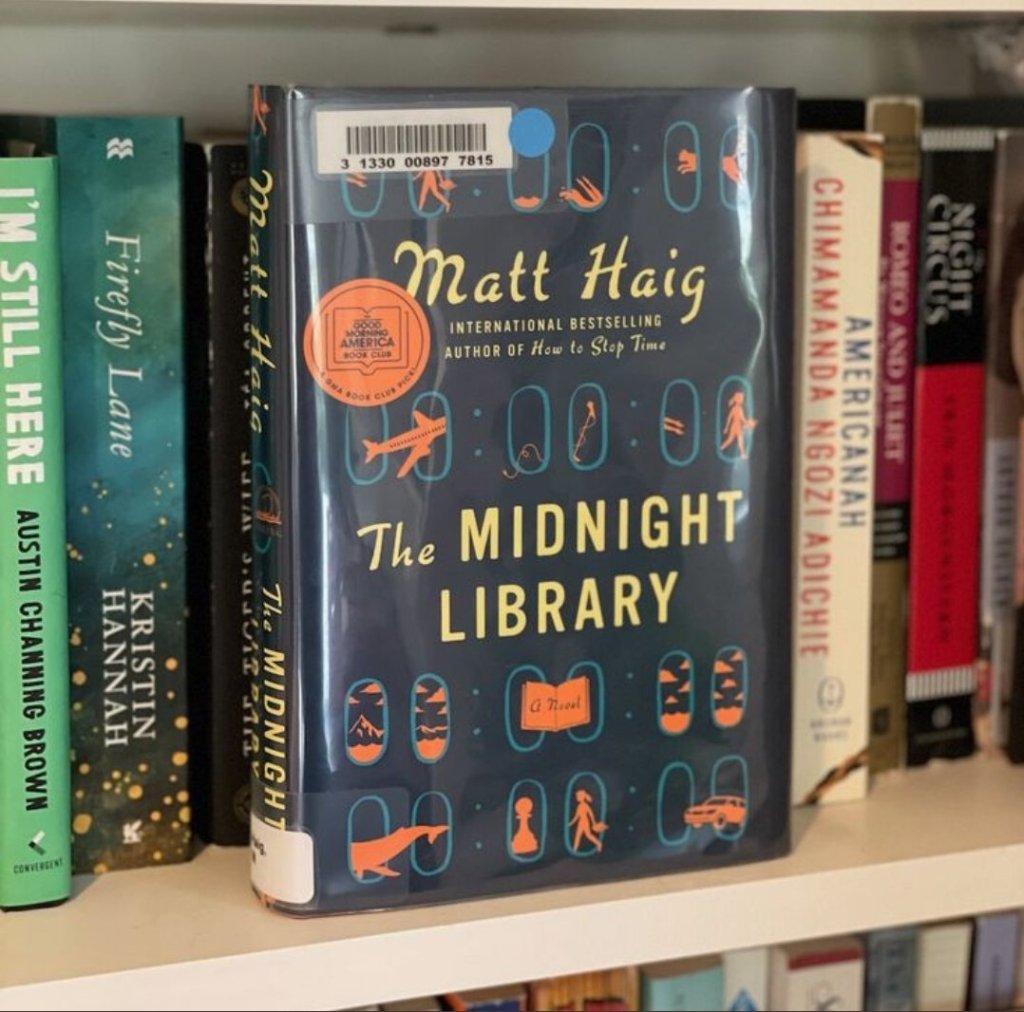
Matt Haig’s Midnight Library made me visit Goodreads to check out his other books, which I believed deserved a spot on my reading wish list. I didn’t know yet how he typically wrote in his previous works of fiction, but I was quite amazed by the story concept and the plot structure of Midnight Library. In fact, Matt Haig had a history of mental health struggles and had battled depression, which made it all the more impressive that he could craft such a sci-fi and life-reflection narrative.
Imagination and life reflection were central to the story. Nora’s journey resonated with those in their thirties who might have faced depression or overthinking about their success in life. The idea of a magical library was fresh and brilliant for sci-fi lovers. Everyone in the world had likely wondered about the life they might have had if they had made different choices, or imagined accepting something they had previously rejected. The concept of the Regret Books in this story served as a reminder of those imagined regrets.
One of the things I appreciated about this book was that Matt Haig included an inspiring scene related to science that revealed the human instinct to choose life over death. This occurred when Nora opened a book about deciding to become a scientist and ventured to the North Pole, where she was nearly eaten by a giant polar bear. She admitted to herself and even prayed for her survival. This moment was when Nora realized she still wanted to live and be helped. It was also a moment where science could explain that humans have a natural instinct to fight for life, and that overcoming problems and failure in life was logically similar to fighting the threat of a polar bear.
However, I sometimes got lost in certain parts of the story that presented inconsistent ideas. For instance, why was the cat still dead in one scenario, while Izzy and Joe could both be alive and dead in different parts of the story? I reminded myself that, as a writer, Matt Haig had the opportunity to craft a puzzle-like plot, as it was a science fiction fantasy.
“Between life and death there is a library, and within that library, the shelves go on forever. Every book provides a chance to try another life you could have lived. To see how things would be if you had made other choices… Would you have done anything different, if you had the chance to undo your regrets?”
“It is easy to mourn the lives we aren’t living. Easy to wish we’d developed other other talents, said yes to different offers. Easy to wish we’d worked harder, loved better, handled our finances more astutely, been more popular, stayed in the band, gone to Australia, said yes to the coffee or done more bloody yoga. It takes no effort to miss the friends we didn’t make and the work we didn’t do the people we didn’t do and the people we didn’t marry and the children we didn’t have. It is not difficult to see yourself through the lens of other people, and to wish you were all the different kaleidoscopic versions of you they wanted you to be. It is easy to regret, and keep regretting, ad infinitum, until our time runs out. But it is not lives we regret not living that are the real problem. It is the regret itself. It’s the regret that makes us shrivel and wither and feel like our own and other people’s worst enemy. We can’t tell if any of those other versions would of been better or worse. Those lives are happening, it is true, but you are happening as well, and that is the happening we have to focus on.”
 a black mirror to read then to write