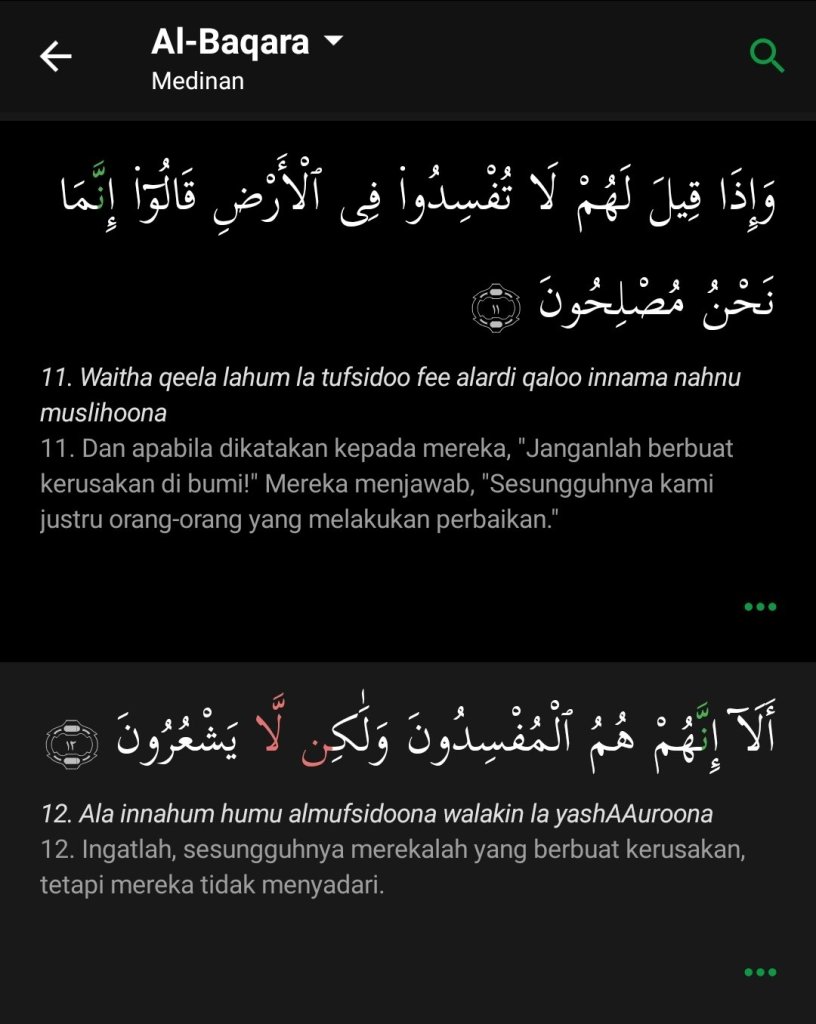
Tidak ada Tuhan yang berhak disembah kecuali Engkau (ya Allah), Maha Suci Engkau, sesungguhnya aku adalah termasuk di antara orang-orang yang berbuat zalim.
Tidak ada Tuhan yang berhak disembah kecuali Engkau (ya Allah), Maha Suci Engkau, sesungguhnya aku adalah termasuk di antara orang-orang yang berbuat zalim.
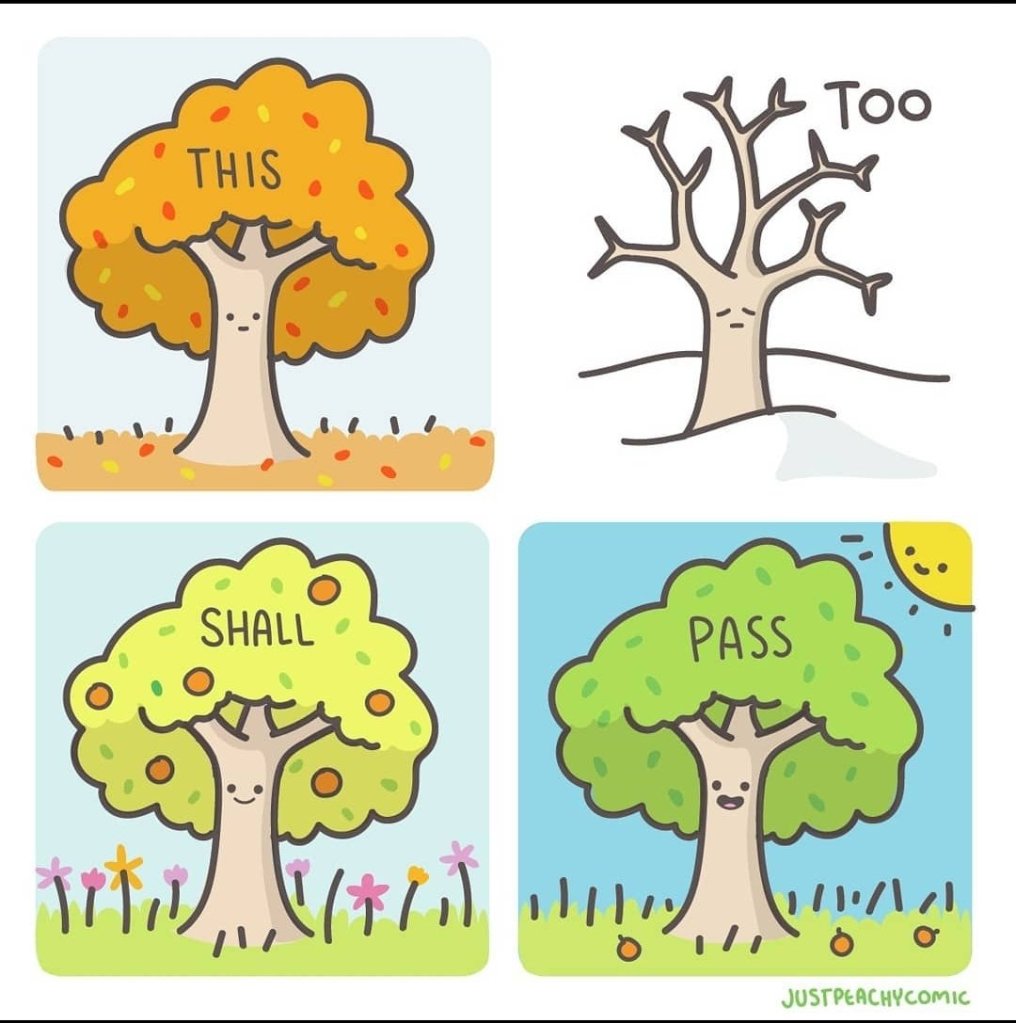
Stress ya?
Kata beberapa teman sih mungkin kurang “me time” atau sebaliknya kurang kesibukan.
Apa iya?
Kerjaan lagi banyak-banyaknya, ada tambahan kerjaan lainnya, belum lagi menemani anak sekolah online, olahraga pun sudah hampir setiap subuh dan malam, wishlist baca buku masih jalan kok, bahkan kegiatan agama pun ada. Wah betul, kurang “me time”!
Berselancar di media sosial sebentar, mencari inspirasi “me time” apa ya enaknya. Aha! Duduk di kedai kopi Sabtu sore dua atau tiga jam saja seorang diri, sepertinya cukup. Diputuskan begitu.
Masih ada voucher yang bisa ditukarkan segelas kopi dan sepotong roti. Baiklah ke kedai itu saja hemat!
Eh, tak sengaja kutengok kulkas, wah lengkap sekali buah-buahan. Mulai dari buah kiwi yang sengaja dibeli banyak bulan lalu karena sedang murah-murahnya, apel yang sudah mulai hampir keriput, buah pear berbagai warna, sampai mangga muda untuk dirujak. Lagipula masih ada sisa cinamon roll kemarin lengkap dengan unsweetened almond jam yang masih penuh satu jar. Kalau mau gurih, dimsum di freezer tinggal dikukus saja. Hmm…
Dari pada ke kedai kopi tapi sibuk memikirkan buah dikulkas, Sabtu soreku tak jadi di kedai kopi. Jus buah campur rasa asam, di kursi makan rumah dan sedikit playlist musik langganan Gramedia adalah Sabtu soreku.
Asik, si voucher masih bisa dipakai buat tambahan beli sepatu anak sesuai rencana awal.
Agar tambah sempurna “me time” Sabtu sore ini, semuanya ditulis saja untuk suatu saat bisa dikenang di suatu Sabtu sore nanti.
-di Bogor suatu Sabtu sore disertai mendung gerimis tipis.
MasyaAllah!
Entah berapa banyak ungkapan ‘MasyaAllah’ yang terucap selama baca buku ini. Mengarungi Samudera Al-Fatihah, authornya adalah Jurnalis Tempo kalau dicek LinkedIn beliau sekarang Director di Tempo Institute. Terbayang betapa Pak Qaris Tajudin ini adalah tipe pemerhati, logis, filosofis dan pratikal. Buku ini saya beli bukan di toko buku, baru sekarang baca buku dari Kukuruyuk Publishing, saya tahu dan beli buku ini dari satu mutual friend yang dulu berkarir di Tempo juga. Beliau ini lulusan Al-Azhar-Kairo, jadi pemahaman tafsir dan runutan sumber yang diambil pun tidak kaleng-kaleng meski sangat ringan.
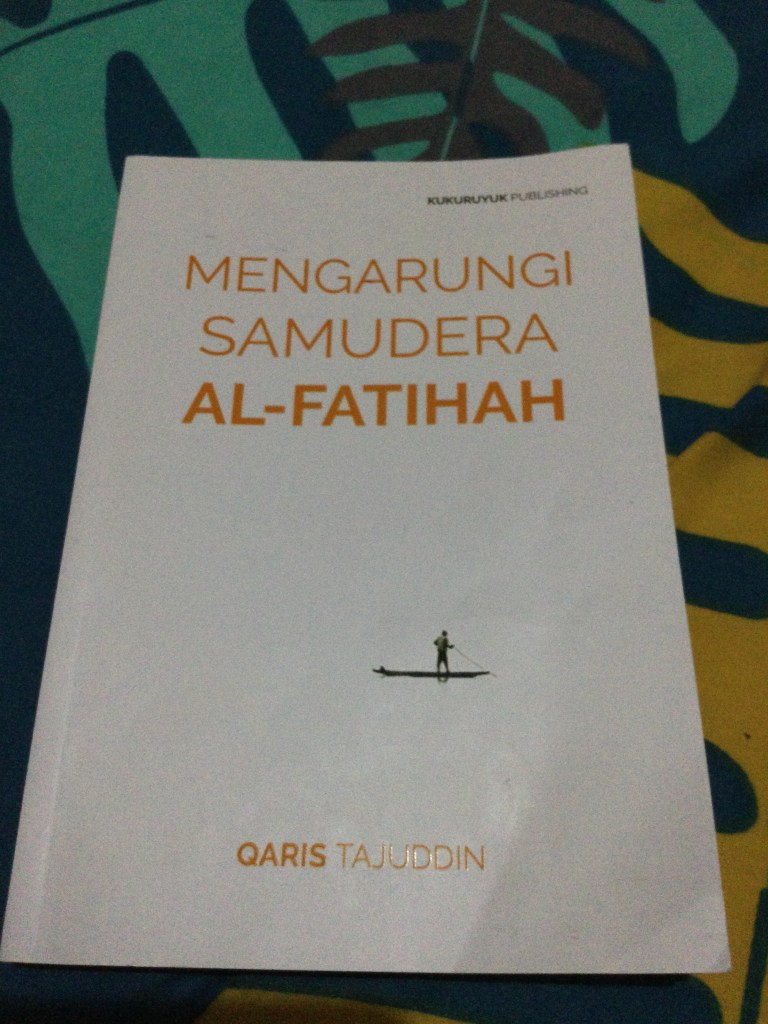
Berawal dari ceritanya sebagai jurnalis yang pernah hampir mati dicurigai War Lord di Afghanistan dan merasa bahwa dengan kefasihan dan lancarnya melafalkan Al-fatihah pun tak mampu membuat yakin bahwa dia muslim alih-alih jadi inspirasi untuk mendalami makna Al-fatihah. Saya pun kagum dengan beberapa sumber yang dibahas adalah berdasarkan dari khutbah sholat jumat (tentunya disebutkan pula sumber asli nya), inspiring sekali bagi bapack-bapack jamaah soljum yang sangat memperhatikan isi khutbah bahkan bisa menulis apa yang disampaikan dan juga sebaliknya khotibnya pun inspiring karena terus berinovasi walau nilai maksud nasihat agama yang disampaikan sama, namun disampaikan dengan presentasi dan tambahan ilmu-ilmu baru.
Buku ini ringan tapi sangat padat penuh ilmu dan filsuf, tidak mubazir. Hanya butuh dua kali shubuh, buku ini selesai dibaca itupun dengan penghayatan (bahkan bisa saja satu shubuh jika anakku tidak bangun terlalu pagi). Yang dibahas adalah ayat demi ayat, jadi ada sekitar tujuh bagian dan tambahan satu bagian yang isinya pengantar sumber-sumber yang menginspirasi penulis. Yang banyak diulang-ulang di dalamnya adalah pengingat sifat Arrohman Arrohim Allah yang ada pada awal surat Al-fatihah.
Ada banyak ilmu yang bisa di-highlight namun rasanya sulit membuat resume nya karena saking padat dan tidak mubazir kalimat, semua pada buku ini adalah hightlight. Agar tidak lupa, adalah 7 poin tafsir dari buku yang ditulis oleh ahli agama, kedokteran dan beberapa bidan lain yaitu Fakhruraddin Ar-Razi (kelahiran Iran). Ini adalah ilmu yang juga disampaikan oleh khotib sholat jumat yang dicatat di buku kecil (smartphone) penulis dan akhirnya ia tulis di buku karyanya. Ar-Razi mengungkapkan bahwa al-fatihah adalah kunci dari 7 pintu: ayat 1 adalah pintu pengingat akan kasih sayang Allah dan selalu dibaca di semua kegiatan umat islam, ayat 2 adalah pintu terima kasih (mudah ditebak) karena diawali dengan memuji Allah atas segala semesta alam yang diciptakanNya, ayat 3 adalah pintu karunia (bukan pintu kasih sayang saja), ayat 4 adalah pintu ketakutan untuk hari pembalasan, ayat 5 adalah pintu permohonan, ayat 6 adalah pintu pengharapan karena berada di jalan yang lurus bukanlah sebuah proses sendirian melainkan dengan hidayah atau pengharapan yang diberikan oleh Allah, ayat 7 adalah pintu kebersamaan (cukup unik dan out of the box) karena manusia butuh manusia lain untuk saling mengingatkan agar berada di jalan lurus.
Jumuah Mubarak!
Anak Adam telah pikun dan masih menginginkan dua hal: menginginkan harta dan menginginkan umur.
(HR. MUSLIM)

"Jika kesunyian tak mampu menghadirkan ketenangan,jika sujud dan ruku' kita tak lagi mendatangkan ketenteraman dan kesejukan jiwa, ada yang perlu kita tengok dalam diri kita. Kita perlu mengambil jarak dan melakukan hentian sejenak dari kesibukan-kesibukan yang terus memacu kita untuk berlari.
Jika bertambahnya rezeki tak menambah kebahagiaan, ketenangan dan kekhusyukan, ada yang perlu kita periksa sejenak. Atas sedekah dan ibadah kita, ada yang perlu kita cermati dengan jernih barangkali ada salah niat yang terselip."
(Muhammad Fauzil Adhim)
Betapa banyak pahala yang mengalir untuk temanku, Nida, yang telah menitipkan buku ini. Dari setiap kali aku atau orang lain yang mampir ke rak buku mengingat Allah dan agamaNya melalui buku ini, maka kebaikan pahala untuknya, MasyaAllah. Namun sepertinya buku ini masih perlu lebih banyak dipinjamkan, noted to my self.
Isinya semua tentang tafakkur tadabbur, ada tiga bagian namun semuanya mencakup hablu minaAllah dan minannaas. A life reflection, a mind refreshing, a soul and a heart renewal. Conceptual dan practical, cocok untuk reminder di saat futur. Dalil yang ada di dalamnya adalah Quran dan Hadis shahih. Narasinya adem dan tegas dan tidak mubazir kalimat karena singkat di setiap judul.
I can’t help but remember the time I became curious about the history of the World Wars, both the first and the second. From The Diary of Anne Frank and The Boy in the Striped Pajamas (the novel) to various movies and TV series about the World Wars, such as The Imitation Game, Charité at War, The Bletchley Circle, and even Downton Abbey (lol), I’ve developed a fondness for learning more—whether it’s art or trivia related to them. Perhaps, at times, I could even re-write everything I’ve watched about the World Wars, despite the fact that I don’t particularly enjoy reviewing movies. As for the book review I’m writing, the theme of this book is similar to the spectacular movie Dunkirk. I appreciate both the movie and this book, despite the sad memories they evoke about the horrors of war.

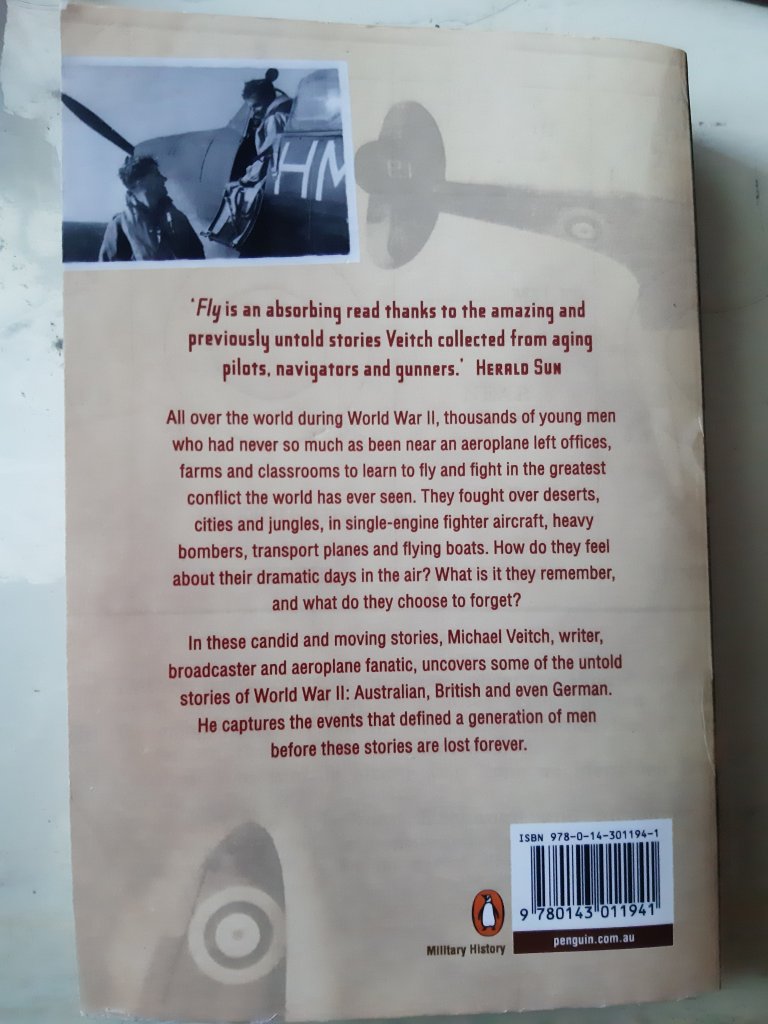
Well, I have finally finished the last page of this masterpiece, FLY – written by an author who is also known as a broadcaster on popular TV shows in Australia. For many readers, including myself, this is not just an ordinary book; it is a research work, a collection of biographies from history’s witnesses, discussing expertise, technology, and memory. These three hundred pages introduce readers to the pilots, air gunners, and navigators who fought during World War II. Interestingly, it covers not only the Royal Air Force (RAF), Royal Australian Air Force (RAAF), and Royal Navy Air Service (RNAS), but also the Luftwaffe. By reading this, I was able to explore and do a bit of further research on the differences between these air services.
However, this book seems underrated by reviewers on Goodreads. In my opinion, it even deserves a 4.5 out of 5. I tried to guess the expectations of the reviewers who gave it three out of five stars. Some of them might have found the plot and the paths of the historians similar: how they initially joined the air force, were selected to fight in the war, their memorable experiences while flying, the frightening moments during the war, and how they narrowly escaped death. Furthermore, some readers might have expected more pilots from other countries. I find myself in a similar position to those readers, wishing Michael Veitch had included more pilots from Germany (Luftwaffe) and other countries such as Italy and Japan. Additionally, from my point of view, either the editor or the writer could have added a sentence in each title to highlight the unique aspects of the airmen. This would have helped build awareness of these historians. For instance, Fred Phillips, Pilot – RAF, whose story goes beyond just being a senior pilot at Qantas.
Nevertheless, what Michael Veitch has done with this book is brilliant. Particularly for aviation enthusiasts, as he claimed in the book’s opening, he succeeded in creating a masterpiece of his dreams and for the science of world history, since not all of these airmen had exposed their stories in the media. Interestingly, I share the same curiosity about Adolf Hitler as Veitch, who confessed his astonishment when meeting Peter Alexander Mehrtens, a Luftwaffe pilot who had shaken hands with Hitler and claimed to have had a close relationship with Eva Braun. As a result, Mehrtens was placed on the first list of the other twenty airmen.
The idea of reading about one airman per day is a good way to give the reader space to absorb the connected history. Especially for those who are passionate about airplanes, they should enjoy exploring the Lancaster or the squadron. Since the book was written in advanced journalistic English, re-reading it is essential to build a comprehensive understanding of history. I remember a historical connection to Indonesia, told by Arthur Cundall – the navigator of the RNAS who defended the oil refinery in Palembang (South Sumatra) from the Japanese in 1942, three years prior to Indonesia’s Independence Day.
She is not crying,
Just her stiff upper lip is humming the saddest song in the era.
She is not crying,
Just her trembling hand is scribbling the unspoken thought.
She is not crying,
Just her sore eyes are staring at the unfinished poem.
She is not crying,
Just her heart lingers with the unfavourable destiny.
Just she is not crying.
Kau butuh hilang agar dicari, kau butuh pergi agar bisa pulang.
Kau butuh kesepian agar ditemani, kau butuh diam agar ditanya.
Hanya saja, seringkali kita mengeluhkan tentang jalan yang harus kita tempuh, demi apa yang kita cari.
Seringkali setengah hati menjalani jalan yang sebenarnya mengantar kita pada apa yang kita cari, hanya saja kita tidak tahu tentang itu.
Yang kita tahu hanya sebatas pada apa yang kita rasakan saat ini, pada apa yang terlihat dan terdengar.
Kadang dan lebih sering menyakitkan juga melelahkan tapi kita tidak punya pilihan selain menjalani.
(Kurniawan Gunadi)
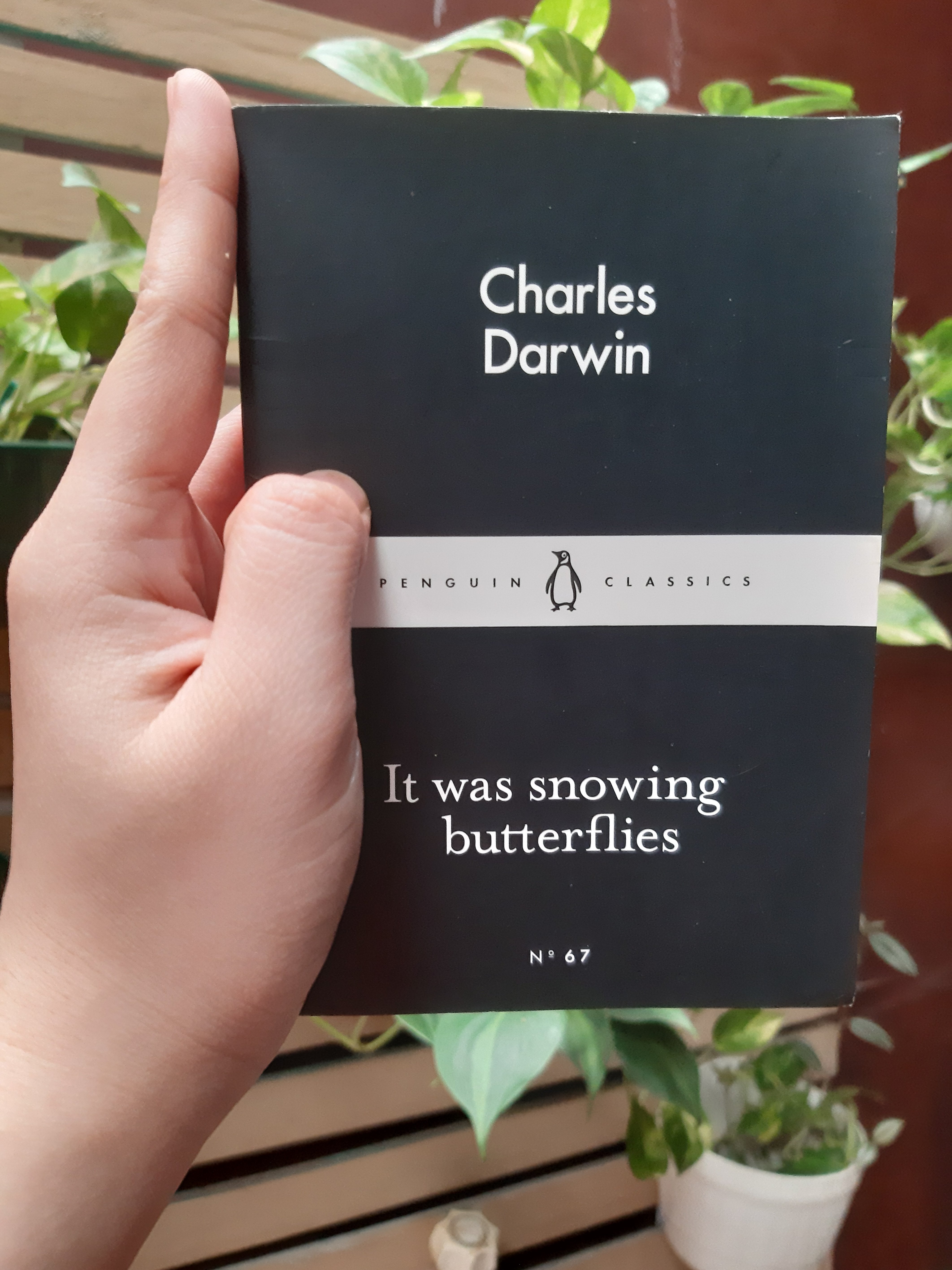
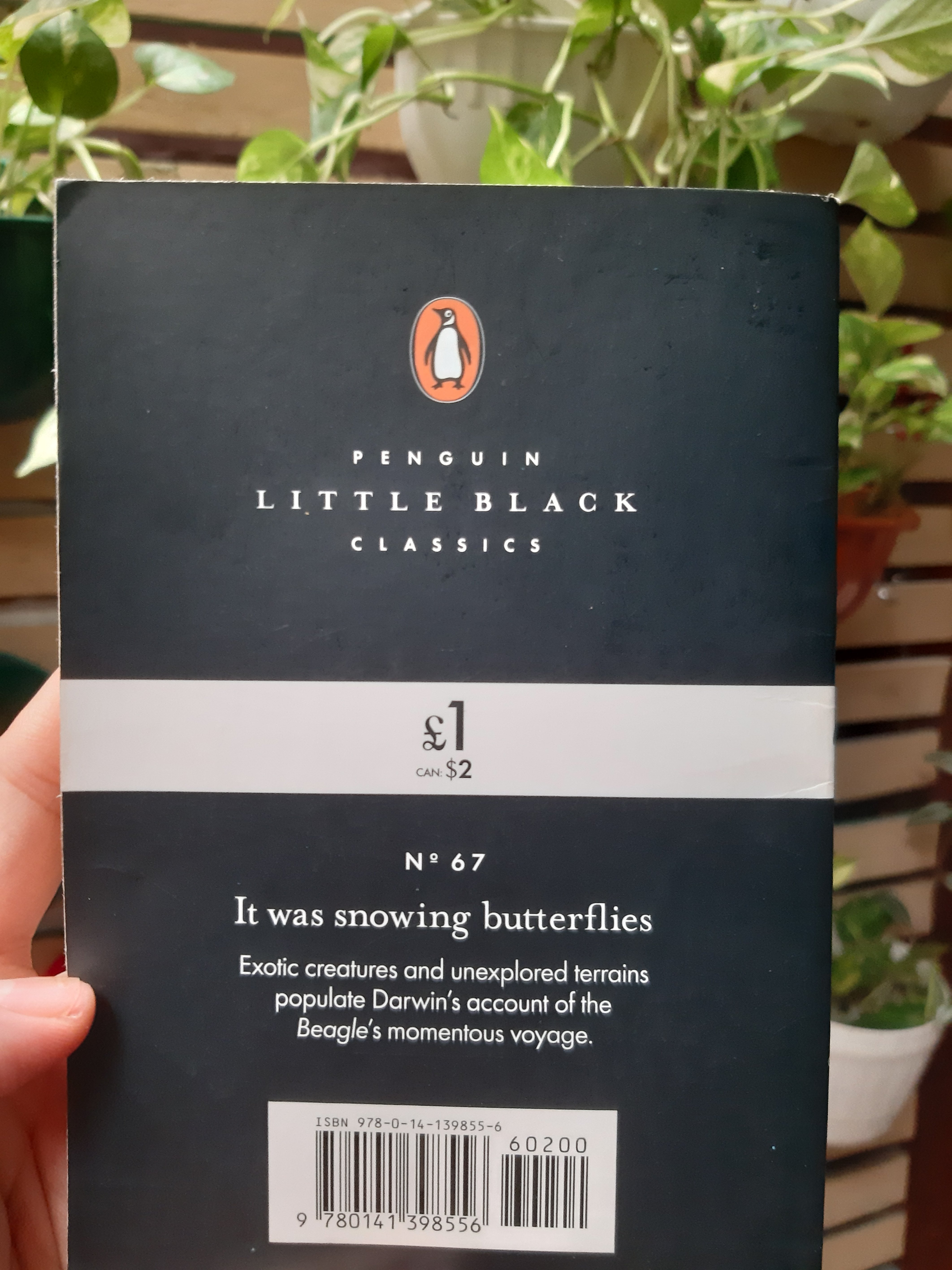
Owing to the pro and contra opinion of people toward Charles Darwin’s theories particularly the evolution one, one of his books was never in my wishlist until I found he was in the 67th in Penguin Classic Books. There are a lot of attractive titles with less than 100 pages from popular writers, such as Charles Darwin, Marco Polo, Karl Marx, Plato, even Jane Austen. The books of Penguin Classic extracted some chapters from the original books, for instance this book I read was an extract from “The Voyage of The Beagle” firstly published in 1839.
Overall, the narrative chronicles the journey of Charles Darwin as both a biologist and a geologist, alongside the voyage of the Beagle to three remarkable locations in South America: Patagonia, Tierra del Fuego, and the Strait of Magellan, all of which lie near Argentina and Chile. According to my ‘Google research,’ this journey took place in the decades following the independence of both Argentina and Chile from Spain. Despite my prior expectations of Darwin offering a fascinating account of the creatures (fauna, flora, and indigenous humans) he encountered during his exploration, I never imagined that I would develop an entirely new perspective on Darwin’s personality, leading me to hypothesize a connection between his theory of evolution and certain traits of his mindset. Beyond the factual explanations of his theory, particularly regarding the close relationship between existing animals and extinct species as evidenced by the guanaco (a species of animal), his written words and illustrations throughout the book reveal him to be an artistic naturalist. I wonder whether he had conceived of the possibility of evolution prior to his empirical discoveries. Of course, this speculation is unrelated to my personal agreement or disagreement with the theory of evolution.
The title, It Was Snowing Butterflies, was derived from a phrase recited by the seamen on their journey to Patagonia, meant to describe the sheer number of butterflies in the area, resembling the species Colias edusa. Not every scientist would recall and immortalize such a romantic phrase in the context of a scientific discovery. Furthermore, his ability to craft a compelling narrative, coupled with his skill in translating nature into vivid prose, adds an artistic dimension that captivated my imagination, allowing me to visualize the real-world settings he described. As a non-scientist, I found myself somewhat bewildered by the plethora of complex and unfamiliar Latin names for the insects and animals he referenced throughout the book. Nevertheless, I remained thoroughly engaged and regarded the work as equally enjoyable as any well-crafted travel memoir. I may consider reading his other, more comprehensive works in the future.
 a black mirror to read then to write